
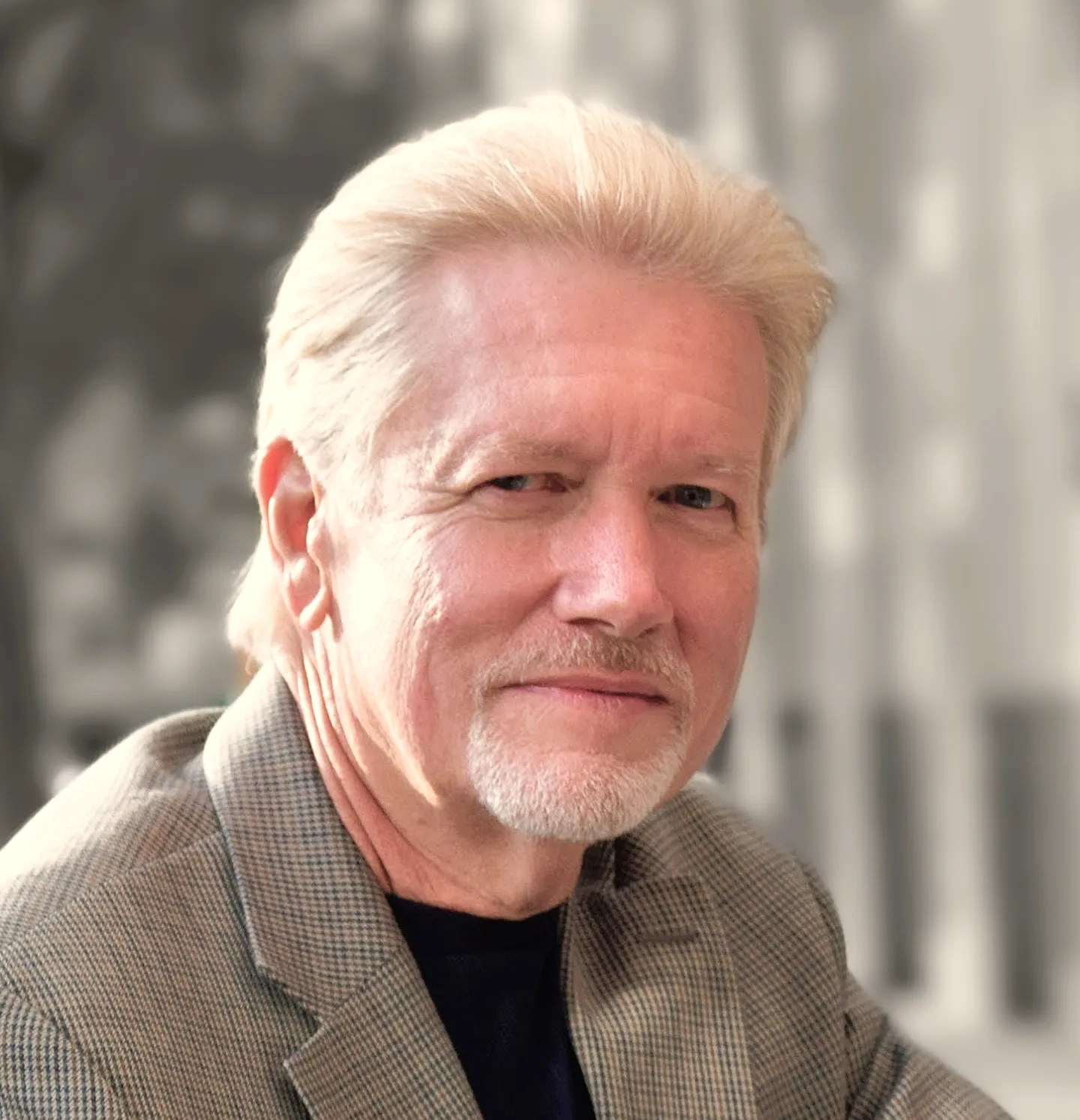
About Ken Grant
Veteran performer, director, producer, and educator—and creator of Practical Acting Skills.
Ken Grant’s work as an educator is rooted in decades spent inside professional performance environments—where clarity, preparation, and consistency determine outcomes.
With more than 35 years of experience across stage, film, television, and live production, and over 21 years training performers and technicians, Ken’s perspective was shaped not by theory, but by repeated exposure to real production conditions where results mattered.
The Short Version
More than 35 years on both sides of the camera — as a performer, a director, a producer, and a coach. More than 20,000 actors, performers, speakers, and corporate presenters trained.
The training offered here is built entirely on what came from questioning conventional approaches, observing the processes of effective professionals, and always looking for the common, definable elements of a craft: what the industry actually needs from performers, and what conventional training consistently fails to deliver.
If you want the longer version — how this came together, what changed the thinking, and why it's built the way it is — keep reading.
Where It Started
Starting out as a performer — stage, film, television, commercials — working on the West Coast, then moving to New York, meant running headfirst into something I hadn't been prepared for.
My training was solid. Years of conventional theatrical work — a lot of Meisner, some Strasberg and Adler — and years of stage experience. In drama class, we had weeks to work on a scene. Sometimes months. We'd perform it, discuss the characters, explore the emotional depth, come back the week after with new insight, perform it again. In theatrical productions, the process was similar — weeks of in-depth rehearsal, doing a scene, discussing it with fellow actors and the director, doing it again and again as the scene developed before opening night.
That training is genuinely valuable. It prepares you for the stage. Much of it transfers. But it is built around a luxury that film and television simply do not offer: time.
Then I started working on camera. And the difference was not subtle.
On set, we learned scenes daily. Rewritten scripts were handed out almost every morning — with changes that had to be absorbed before rehearsal, blocking, or shooting later that day. I had small parts, which meant I could manage. But I watched what the lead actors were going through. Some handled it well. Others were almost in tears. The film and television industry makes demands that are radically different from both the process taught in conventional training and the experience of working on stage — and nothing in that training prepares you for it.
Theater training and film/TV work share the same foundation: truthful performance. What they don't share is the process for getting there. The stage gives you time — weeks of rehearsal, gradual memorization, deep character exploration. The set does not. That mismatch is nobody's fault. It's simply a gap that nobody warned you about — and that this training is specifically designed to close.
In New York, I met Russ Weatherford.
Russ was a working soap opera actor who memorized 15 to 30 pages of dialogue every single night. Not by grinding through it over and over. By using a system — one so efficient he could learn 15 pages verbatim in 15 minutes.
What made his process instantly appealing was this: Russ was doing in one evening what had taken weeks or months in theater class and stage production — learning the lines and analyzing the script well enough to create interesting, specific character choices. Both. The same night. Every night.
Training directly under Russ, then becoming his assistant, led to years of work on something he hadn't done before: taking what he was doing instinctively and breaking it down into a process that could actually be taught. What emerged became the foundation of everything we taught — and that I continue to teach today.















What Moving Behind the Camera Revealed
Working alongside Russ in New York and Los Angeles also meant working in production — directing, producing, watching hundreds of performers from the other side of the camera. That vantage point confirmed what we were already seeing as coaches.
Trained actors — actors with real ability and solid theatrical foundations — struggling not because of what they lacked, but because of what no one had yet given them: a clear, repeatable process for the specific technical demands of professional on-camera work.
From the production side of the camera, we could see exactly what the industry needs from performers to stay on-time and under-budget. Skills that theatrical training was never designed to cover — and doesn't claim to.
That's the gap we built this training to close.
KVG Acting, Orlando
Valerie and I brought that training to Orlando and founded KVG Acting — a full-service acting school that became, over 15 years, one of the most respected training programs in Central Florida.
We modeled it after a college curriculum. Courses had numbers: CT101, SS101, SS201. Each one had a clear prerequisite, a clear outcome, and a clear place in a progression that took actors from their first class to working professional level.
Thousands of actors came through KVG — beginners who went on to book their first jobs, experienced actors who finally understood why their training hadn't been translating to the camera, kids who booked national commercials after a handful of sessions.
The numbered course system you see here is the same one we used at KVG. It works because it tells you exactly where to start and exactly where you're headed.
Straightforward is the only approach that makes sense.
When a teacher says "just feel it" or "trust the moment," what's usually missing is a process to free your head of the distractions — the next line, the next blocking move — that keep you from feeling it as the character.
Let's be honest about what this training is and isn't. It doesn't replace your existing technique — it removes the obstacles that have been getting in the way of it. It doesn't mask nerves — it eliminates the specific source of them. It isn't magic — it's a set of learnable, dependable skills that work every time you apply them.
This process is everything I wish someone had taught me early in my career. Being able to share it now — seeing how it improves performances and shortens the learning curve for aspiring actors — is genuinely gratifying.
I hope we can talk soon. Thank you for your interest.
What Actors Say
A small selection from 25 years of students.
"Earning an undergraduate degree in Theater & Speech did not adequately prepare me for work in this industry. But I can still remember smiling and thinking after just one session with Ken: 'Yeah, this makes sense to me' — and suddenly, confidence began to replace all the self-doubt and confusion. Within days of completing KVG's Commercial 101 coursework, I had booked my first job. Six months and five additional courses later, I had transitioned into the industry on a full-time basis."
— Chris H.
"I was a stunt man before I met Ken Grant at KVG Studios. I had been on numerous sets and shoots but always wanted to be an actor. In just a few short weeks, KVG Studios transformed me into a competent, confident working actor. His truthful and realistic approach to the craft of acting saved me so much time in my quest for my goals"
— Steven B., Maven Productions
"I began training with KVG as a beginning actor. After completing Commercial 101 and Scene Study 101 I signed with a SAG agent, booked commercial roles for Bass Pro Shop and Ginn Resorts, and booked principal roles in several independent films. I use the techniques taught at KVG on a daily basis."
— Rebekah
"Ken is the most energetic and motivational teacher I know."
— Dan L., Actor / Workshop Participant
If I can answer any questions, I'd love to hear from you.
Every message gets a personal reply.